Biographical record
Yamamoto Atsushi
― A lifelong practitioner
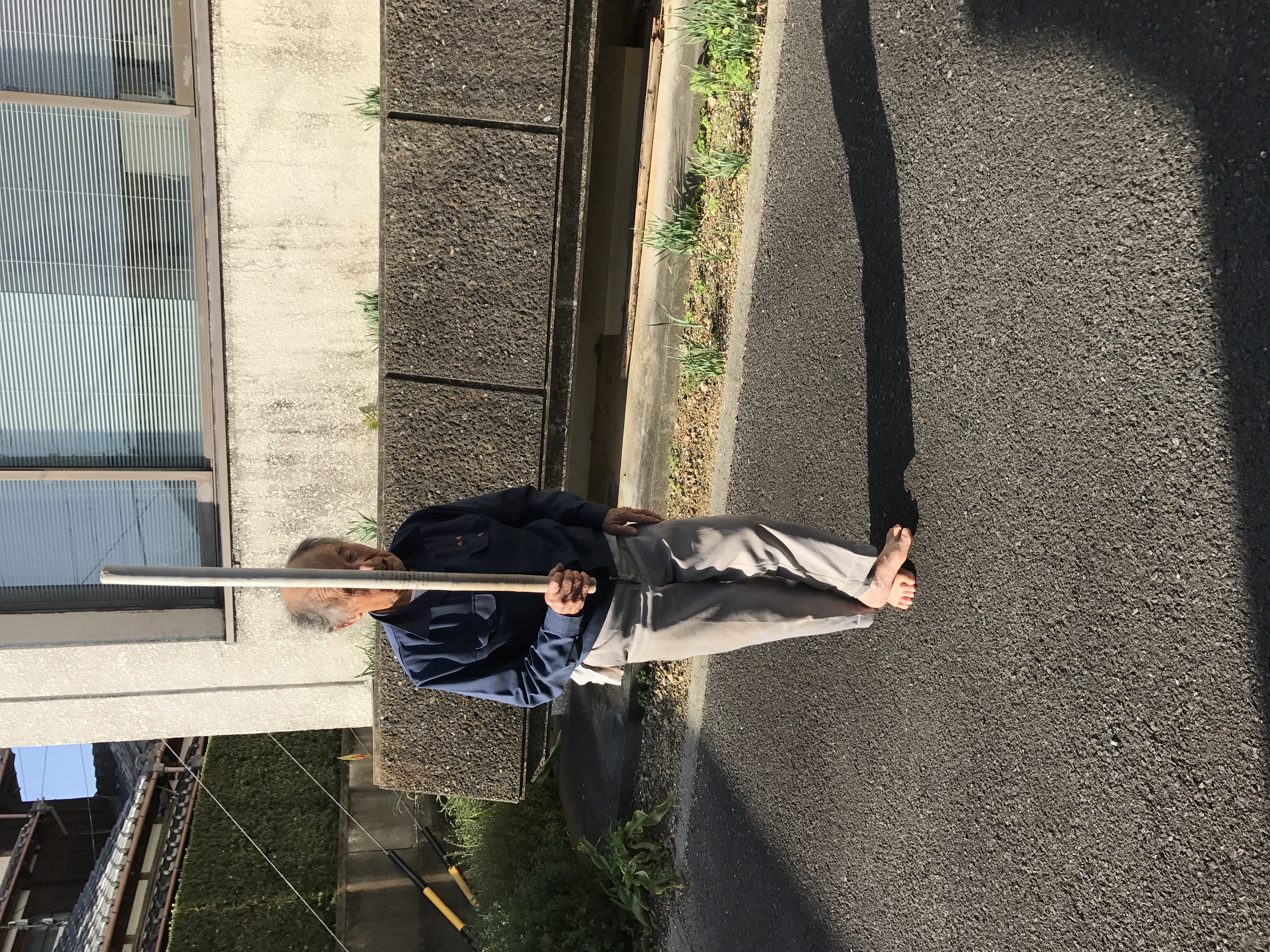
A record of Yamamoto Atsushi, who took part in the modern transmission of Shinkage-ryu at Gokashoura and described himself simply as a lifelong practitioner.
How to read this article
Four distinct layers
- Documented history
- Local and transmission history based on public and supplied sources.
- Firsthand testimony
- The author's direct experience in 2011–2019, generally one or two visits each year.
- Contemporaneous notes
- A deliberately limited selection written at the time of practice.
- Later interpretation
- Retrospective views belonging to the author, not claims made by Yamamoto.
01 — Biographical record
Yamamoto Atsushi — A lifelong practitioner
Yamamoto Atsushi studied the Shinkage-ryu transmitted in Kumamoto under Aikawa Manabu and Shiki Taichirō, and took part in its transmission at Gokashoura in Mie Prefecture.
He died on 23 February 2021 at the age of ninety.
He did not establish a dojo of his own or preside over an association.
Rather than expanding Shinkage-ryu as his own organisation, he taught people who came seeking instruction and passed on what he had received. He maintained this unforced approach to the end.
Of himself, he said:
一生修行者
—a lifelong practitioner.
Sources and referencesHigo Shinkage-ryu Tokyo Keikokai「How the tradition reached Mie」
02 — Documented history
Gokashoura, a place associated with the Aisu family
Gokashoura, Minamiise, in Watarai District, Mie Prefecture, is associated with the Aisu family and is considered the place from which Aisu Ikō, founder of Kage-ryu, came.
Commemoration of the Aisu family at Gokashoura extends back to the pre-war period.
According to the document entitled 愛洲移香斎顕彰会趣意書, in 1934 local figures including Hashikawa Taikan and Nakamura Sasuke, with support from Mikimoto Kōkichi, formed the 愛洲顕彰会.
Researchers were invited from Jingū Kōgakkan, the Jingū administration, and Jingū Library. The group is said to have investigated sites associated with the Aisu family, including the remains of Gokasho Castle, and gathered materials preserved in different places.
In 1935, Ōnishi Gen'ichi published 『南朝の砥柱』. The book discussed Aisu Ikō as the founder of Kage-ryu within the Aisu family, together with related sources and descendants.
The Gokasho Castle site was prepared and the 愛洲公顕彰碑 erected in 1936. In 1938 the site received designation as a historic site from Mie Prefecture.
Research and commemoration concerning the Aisu family and Aisu Ikō thus continued at Gokashoura from before the war.
Sources and referencesSource supplied for this article「愛洲移香斎顕彰会趣意書」Mie Prefectural Library「The founder of kenpō and progenitor of Kage-ryu: the enigmatic swordsman Aisu Ikōsai Hisatada」
03 — Documented history
Nakaseko Shōdō and research on the Aisu family
After the war, Nakaseko Shōdō and others carried research on the Aisu family and Aisu Ikō at Gokasho further.
Nakaseko investigated historical materials concerning the Aisu family over many years and published 『伊勢愛洲氏の研究』 in 1975.
He continued to study the Aisu family and Aisu Ikō in works including 『愛洲移香斎久忠傳考』, and also wrote 『上泉武蔵守信綱傳私考』 on Kamiizumi Nobutsuna.
Mie Prefectural Library's local-material exhibition on Aisu Ikō also listed a series of Nakaseko's publications among its related materials.
The post-war source research built upon the local commemorative work begun before the war.
From that accumulation came a new point of contact between Gokashoura and Shinkage-ryu.
Sources and referencesMie Prefectural Library「The founder of kenpō and progenitor of Kage-ryu: the enigmatic swordsman Aisu Ikōsai Hisatada」CiNii Research「Search results for 中世古祥道」
04 — Source-based transmission history
Shinkage-ryu comes to Gokashoura
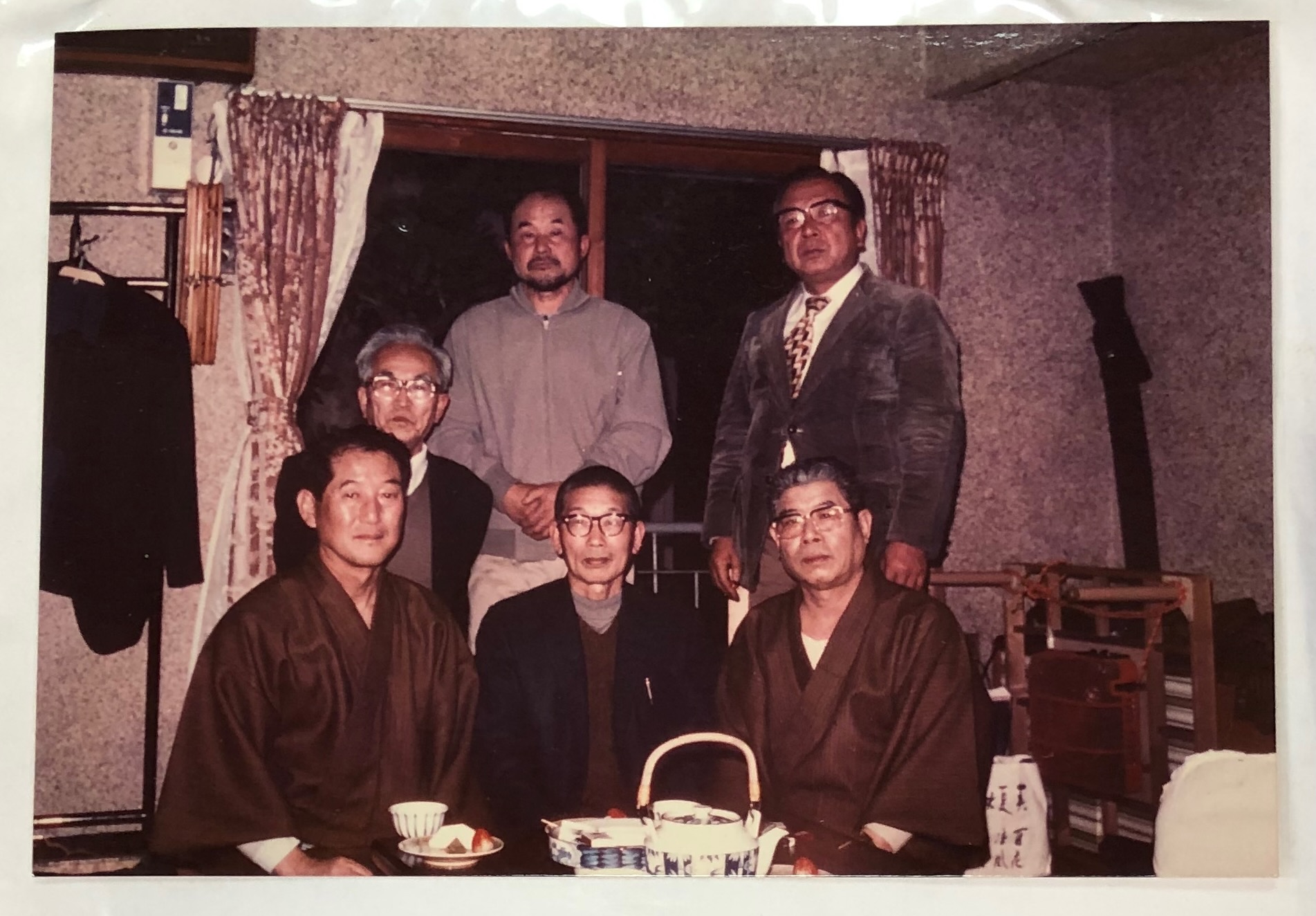
In the spring of 1980, Katsura Seikichi learned that Shinkage-ryu was being transmitted in Kumamoto and invited Aikawa Manabu to give an embu at Gokashoura.
Shiki Taichirō, then living in Ōhara, Kyoto, also took part. Shiki was the sixteenth-generation transmitter of Noda-ha Niten Ichi-ryu and was a fellow student of Aikawa under the same teacher.
Aikawa subsequently began teaching Shinkage-ryu kata to people at Gokashoura, leading to the Higo Shinkage-ryu Mie branch.
It was during this period that Yamamoto began studying Shinkage-ryu under both Aikawa and Shiki.
He continued to receive their instruction until their deaths.
A line of heihō understood as passing from the Kage-ryu begun by Aisu Ikō to Kamiizumi and then Hikita was eventually transmitted in Kumamoto.
In 1980, that Shinkage-ryu was transmitted to Gokashoura, a place associated with the Aisu family.
Sources and referencesHigo Shinkage-ryu Tokyo Keikokai「How the tradition reached Mie」
05 — Documented local history
Aisu commemoration and Kensosai
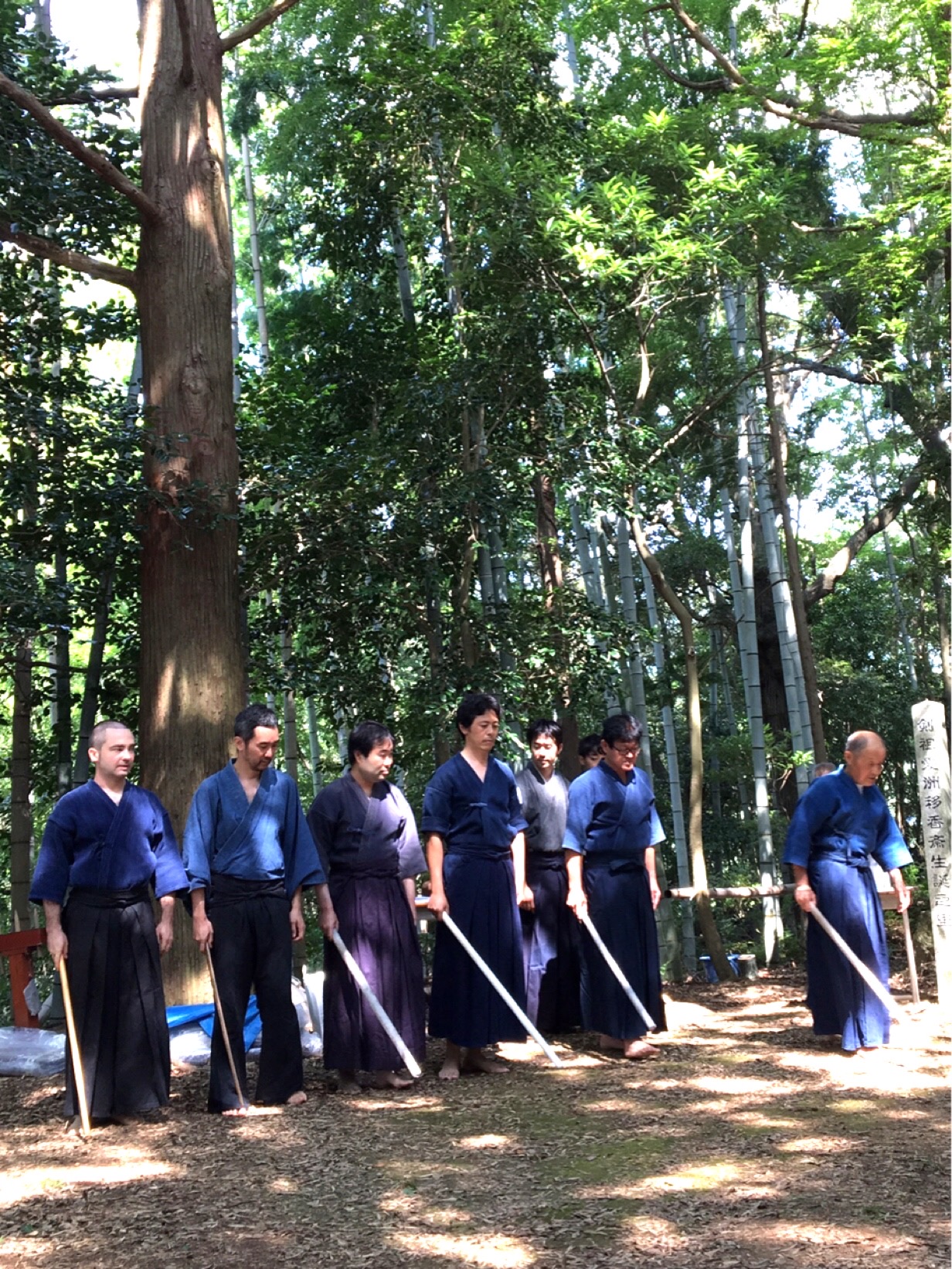
Against the background of Aisu commemoration before the war and post-war research and embu, Gokashoura has hosted the 愛洲氏顕彰・剣祖祭 commemorating the Aisu family and Aisu Ikō.
Before the 愛洲氏顕彰碑, schools of kenjutsu, iai, and related arts associated with Aisu Ikō have offered embu; Higo Shinkage-ryu has also participated.
Yamamoto transmitted Shinkage-ryu at Gokashoura within this setting.
Sources and referencesHigo Shinkage-ryu Tokyo Keikokai「Aisu commemoration and Kensosai」
06 — Firsthand testimony
Shrine carpenter and lifelong practitioner
Yamamoto worked as a shrine carpenter.
In martial practice he did not present himself as a completed master, but called himself 一生修行者—a lifelong practitioner.
He continued practising until shortly before his death at ninety.
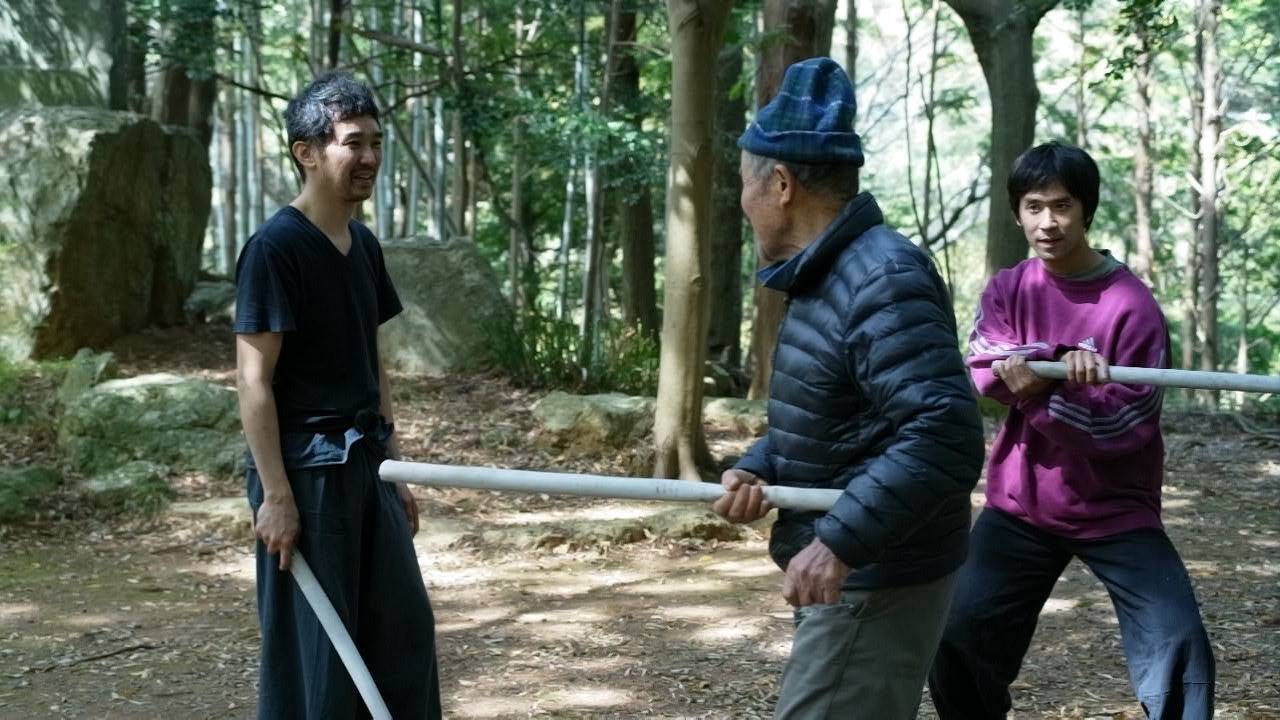
He was exceptionally gentle and kind. During the author's instruction under him, the author cannot remember being scolded.
Nor was he a silent, forbidding, old-style martial artist.
He was surprisingly talkative and often joked.
That easy manner also seems characteristic of who he was.
07 — Firsthand testimony
A teacher without a dojo
Yamamoto did not preside over a dojo or association of his own.
He did not try to expand Shinkage-ryu as his organisation or recruit students; he taught those who came wishing to learn.
There was no sense that he wanted to enlarge an organisation or preserve his name.
When the author visited Gokasho, practice did not begin with everyone suddenly lining up.
First came conversation with Yamamoto.
They talked about recent events and many other subjects, sometimes joking. In time the conversation would naturally turn to Shinkage-ryu, training implements would be taken up, and practice would begin.
This happened often.
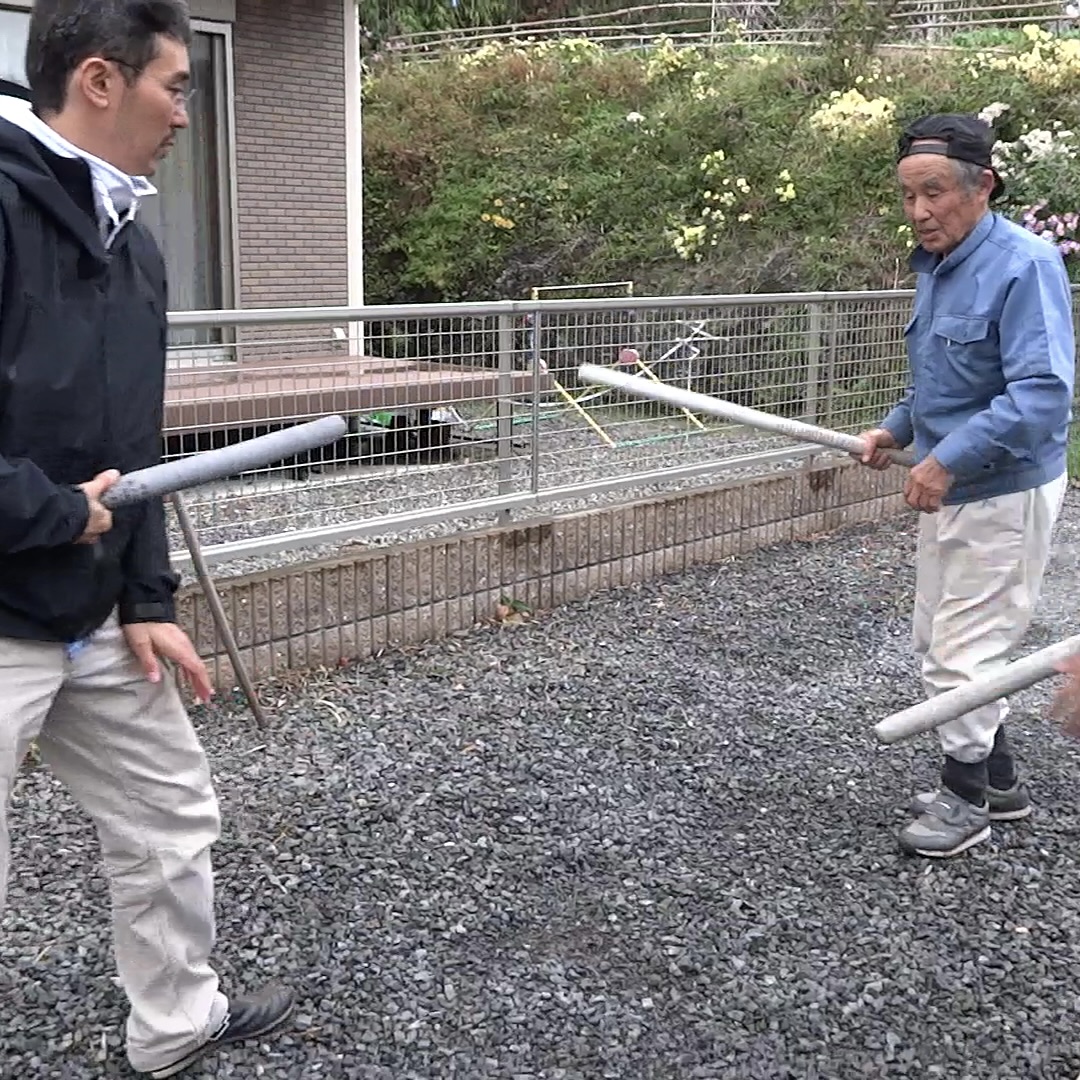
For practice, Yamamoto was usually in everyday clothes rather than keikogi.
He was often barefoot outdoors, but wore footwear where gravel or other footing presented a danger.
There was no special dojo and no special costume.
Practice began naturally within daily life.
The author, too, now generally practises Shinkage-ryu in ordinary clothes.
He does not remember making a particular decision to do so.
08 — Contemporaneous note and later interpretation
Inquiry and verification
One remark captures Yamamoto's teaching particularly well.
A note written on 26 November 2015, when Yamamoto gave the author permission to teach Shinkage-ryu, records the following:
新陰流はキリスト教じゃなくて仏教だから、型覚えに書いてない部分や分からない部分、疑問に思う部分は工夫や検証をする。
In essence, he said that Shinkage-ryu was like Buddhism rather than Christianity: parts not written in the kata record, matters not understood, and points that raised questions should be approached through personal inquiry and verification.
At first glance, it sounds like one of Yamamoto's jokes.
Read alongside his other teaching that day, however, it seems to express his approach to Shinkage-ryu well.
He did not teach students merely to memorise transmitted kata or accept written material as absolute doctrine.
If something was unclear, they should think.
If there was a question, they should try it.
They should then verify it in practice.
With kata, too, he sometimes offered several possibilities rather than imposing a single answer as the only permissible form.
He once raised a question about part of a kata and asked the author:
東京で検証してみて
—try verifying it in Tokyo.
Yamamoto acknowledged questions as questions and asked his students to think and verify for themselves.
This does not mean that transmitted kata may be freely altered.
It means taking what has been transmitted as the starting point, thinking through its significance, and testing it through the body.
The author believes that this disposition may have been what Yamamoto meant by shugyō.
It also seems inseparable from his own determination to remain a lifelong practitioner to the end.
09 — Firsthand testimony
The author and Yamamoto
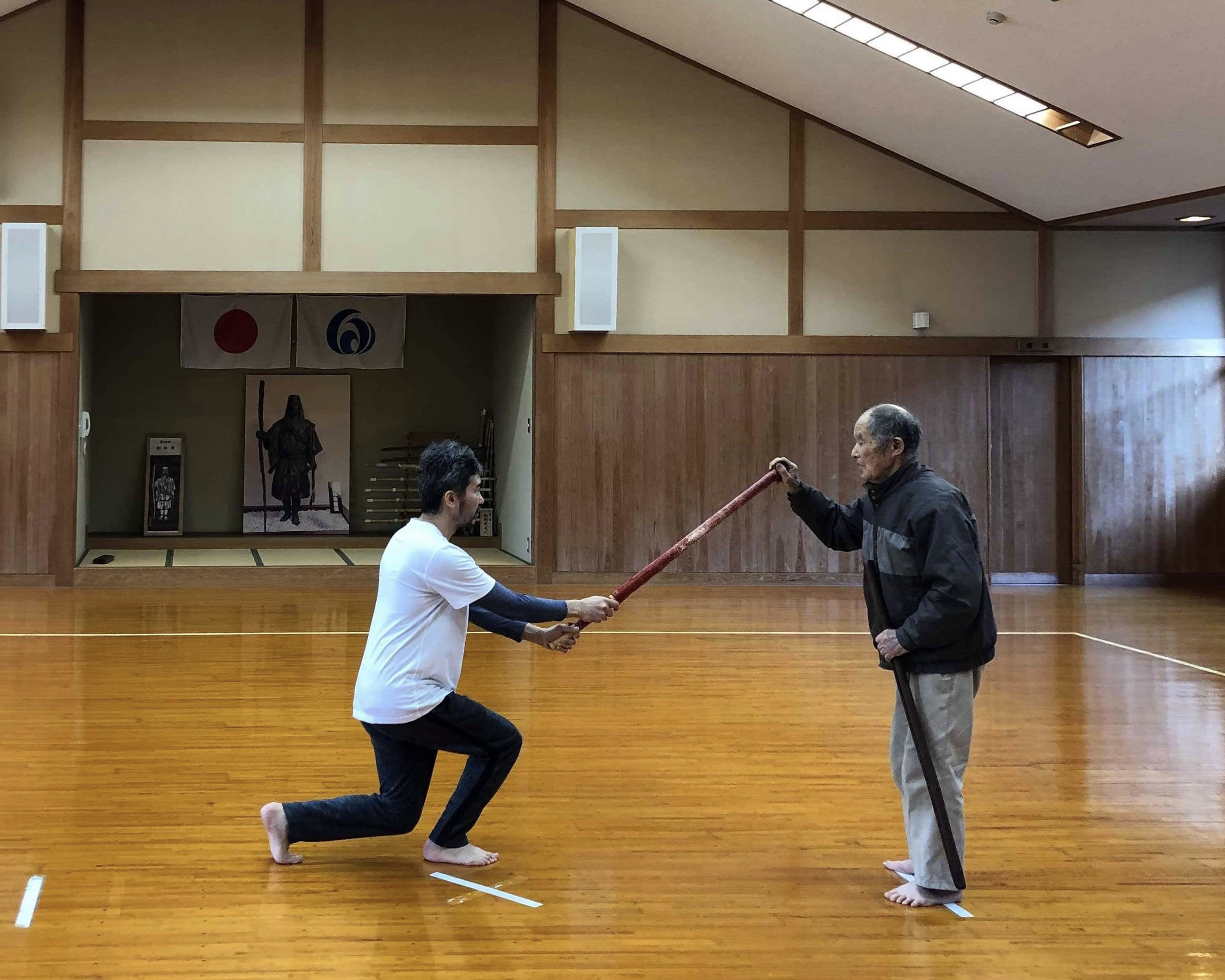
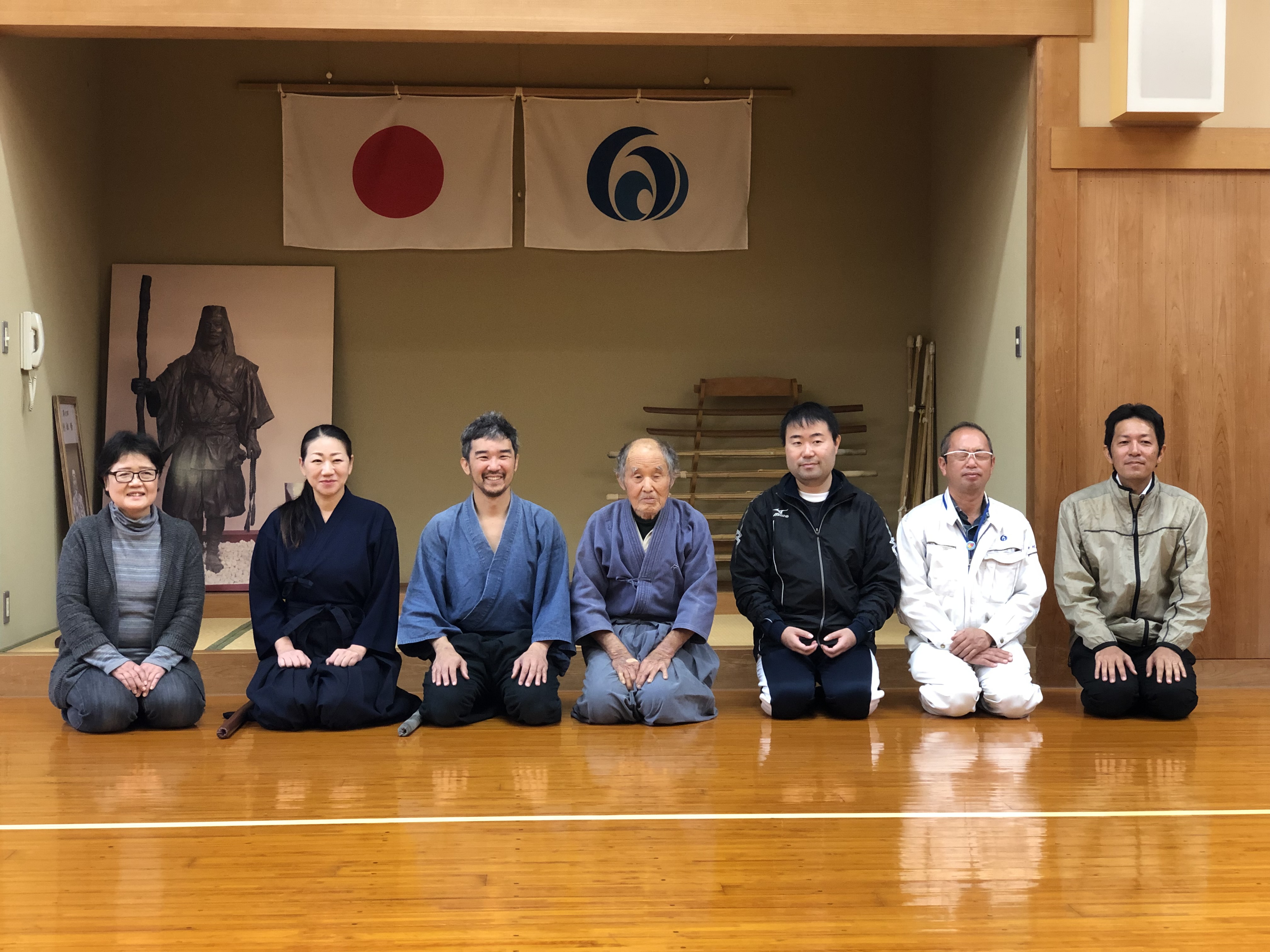
From 2011 through 2019, the author visited Gokasho generally once or twice each year.
These visits included participation in the 愛洲氏顕彰・剣祖祭 and personal visits to Yamamoto for instruction in Shinkage-ryu.
Detailed records were not kept for every practice session.
Only some specific teaching notes remain, together with photographs and video made during this period.
On 26 November 2015, Yamamoto gave the author permission to teach Shinkage-ryu.
The author visited Gokasho again on 25 November 2019 and received direct instruction from him.
In 2020, the COVID-19 pandemic made another visit to Gokasho impossible.
During the pandemic in 2021, Yamamoto was admitted to hospital and died on 23 February at the age of ninety.
The 2019 practice was therefore the author's final opportunity to receive Yamamoto's direct instruction.
10 — Contemporaneous notes
Limited excerpts from training notes
The author retains some notes written while receiving direct instruction from Yamamoto.
Only a limited selection is published here. The complete notes are intentionally not being made public.
These records were written at the time of instruction and have not been supplemented from later memory. Their original technical wording is retained without expansion or reconstruction.
26 November 2015
- Empi(猿飛)
小手を押さえるときは回刀じゃなくても良い
- Sangaku(三学)
松風は担がないで横向きでも良い
- Yatsugumi(八組)
波動は下からの方が良いかも
- Note from the same day
新陰流はキリスト教じゃなくて仏教だから、型覚えに書いてない部分や分からない部分、疑問に思う部分は工夫や検証をする。
25 November 2019 — Gokasho
- Empi(猿飛)
猿飛 最初は小さく。
- Sangaku(三学)
軽く打つ。触れる感じ。
- Yatsugumi(八組)
中和 斜めに止める。鍔で。
- Kuraizume(位詰)
肘から先に動かす。
- Chū-gokui(中極意)
乱勝 くねり。
These short phrases cannot reconstruct everything taught on those occasions.
They are not explanations polished later, but records written while receiving Yamamoto's movements and words in person.
They are preserved here only as a limited record of one aspect of how he actually taught Shinkage-ryu.
11 — The author's recollection and interpretation
Passing Shinkage-ryu onward
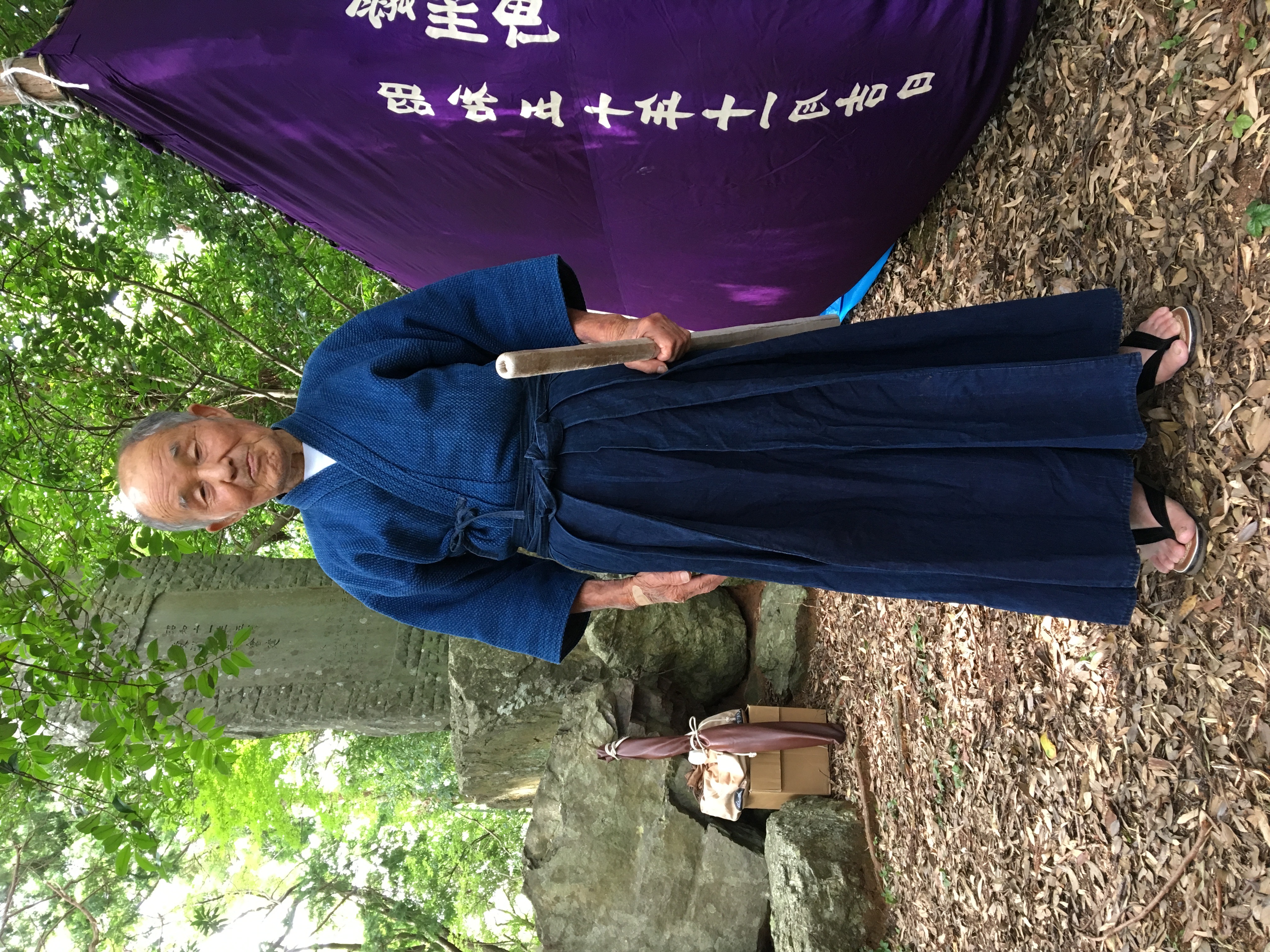
Yamamoto left no dojo bearing his name.
He did not build a large organisation.
He did not boast of his transmission.
He lived as a shrine carpenter, practised in ordinary clothes, spoke with those who came to see him, and took up a training implement to teach when the time came.
To the end, he remained a lifelong practitioner.
Seen retrospectively, the way he carried heihō to those who wished to learn, without establishing a dojo or organisation, can recall figures such as Kamiizumi and Hikita, who once travelled with heihō and taught people in different places.
This is only the author's retrospective impression. Yamamoto did not position himself in that way.
Indeed, he remained distant from presenting such historical significance as his own achievement.
After a long interval, Shinkage-ryu was transmitted to Gokashoura, a place associated with Aisu Ikō.
Within that transmission, Yamamoto did not adorn himself with the status of transmitter. He simply continued practice as one practitioner.
He taught generously those who wished to learn.
Passing Shinkage-ryu onward may not have been a special project for him, but practice itself as part of daily life.
Sources
Sources and references
The local and transmission history draws on the public and supplied sources below. The author's direct experience and contemporaneous notes are presented separately from that source-based history.
- Mie Prefectural LibraryThe founder of kenpō and progenitor of Kage-ryu: the enigmatic swordsman Aisu Ikōsai Hisatada
- CiNii ResearchSearch results for 中世古祥道
- Higo Shinkage-ryu Tokyo KeikokaiHow the tradition reached Mie
- Higo Shinkage-ryu Tokyo KeikokaiAisu commemoration and Kensosai
- Source supplied for this article愛洲移香斎顕彰会趣意書